Personal protective equipment is not an accessory; it is the last line of defence when all other measures have been exhausted. The law requires employers to provide them, but in practice, choosing the right size and category makes all the difference between equipment that is actually worn and equipment that remains in the cupboard.
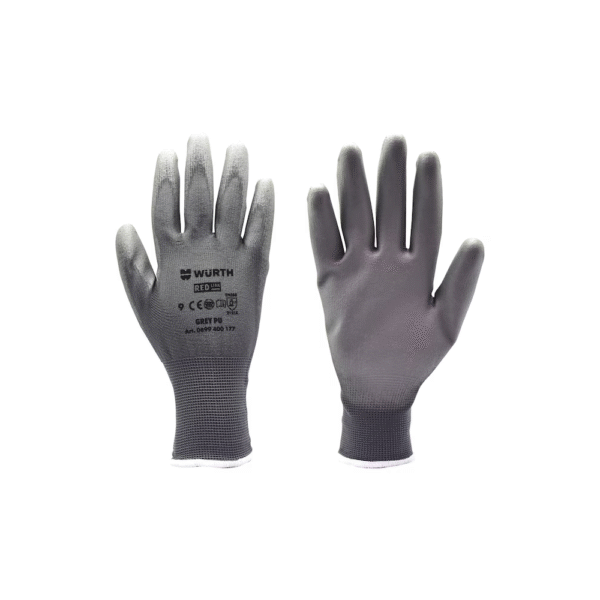
At Geosantro, you will find work gloves in sizes 8 to 11, made from nitrile, latex, leather and knitted with a polyurethane coating, as well as 1000V electrician’s gloves and welding gloves. Alongside these, we stock clear and tinted safety glasses, full-face goggles, safety helmets, hearing and respiratory protection equipment, protective clothing and fall arrest systems with shock absorption. All bear the CE mark and are suitable for use on construction sites, in workshops, in industry and for electrical work.
Order online or visit our shops in Limassol and Nicosia, with free delivery throughout Cyprus on orders over 50 euros. Business partners can log in to the platform and view preferential prices with an additional discount.
Showing 1–32 of 57 results

In stock

In stock


Sold out

In stock

In stock

In stock

In stock

In stock

In stock

In stock

In stock

Sold out

In stock

In stock

In stock

In stock

In stock

In stock

In stock

Sold out

In stock

In stock

In stock

Sold out

In stock

In stock

Sold out

In stock

In stock

In stock

Only 2 left in stock
The number indicates the circumference of the palm in inches, measured at the widest point, excluding the thumb. An 8 corresponds to a small hand; 9 and 10 cover most adults; 11 is a large size. Measure with a sewing tape measure and round up. A glove that fits too tightly tires the hand, whilst a loose one reduces your sense of touch with the tool.
Nitrile is resistant to oils, fuels and abrasion, making it the go-to choice in a garage. Latex provides a better grip on wet and slippery surfaces. Polyurethane-coated knitted gloves are thin and precise to the touch, ideal for assembly work. Leather protects against cuts, heat and sparks, which is why it is favoured by welders and those who work with sheet metal or handle rough materials on construction sites.
It is the European standard for mechanical hazards. Next to the hammer icon, there are four digits and sometimes two letters, which rate resistance to abrasion, cutting, tearing and puncturing. The higher the number, the better the performance in that particular test. Always compare the ratings with the actual risks of your own job, rather than simply with the highest available number.
The CE marking indicates that the product complies with the European regulation on personal protective equipment. Category I covers minimal risks, such as light gardening gloves. Category II covers intermediate risks, to which most gloves and goggles belong. Category III relates to risks that can be fatal, such as electric current, chemicals and protection against falls, and is subject to stricter controls.
When working near or on live cables. These are dielectric latex gloves, tested at a specific voltage, and are classified as Category III. Check them before each use for holes by inflating them with air, and keep them away from oils and sharp objects. Store them in their own case and do not leave them lying around in the toolbox. They do not replace circuit isolation; they merely supplement it.
Open-face goggles protect against particles coming from the front, such as those produced by grinding, drilling and general work. When there is dust coming from all directions, or when dealing with liquids or chemicals, you need a closed-face goggle-type mask that fits snugly against the face. Clear lenses are for indoor use and tinted lenses for bright sunlight when working outdoors; in all cases, the lenses must bear the CE mark.
Check the manufacturer’s date, which is printed on the inside of the shell, and usually indicates three to five years of use. Regardless of this, a helmet that has been knocked should be replaced immediately, even if there is no visible damage, as the material has already absorbed the impact. You should also replace it if the plastic has faded, become chalky or cracked, as the sun causes it to age.
It is the lanyard that connects the full-body harness to the anchor point and incorporates an energy absorber. In the event of a fall, the energy absorber deploys in a controlled manner and reduces the force exerted on the body. The two-metre length requires sufficient clearance below, so calculate the available headroom before starting work. After any fall, the equipment must be permanently taken out of service.
The employer. Health and safety legislation requires them to assess risks, provide suitable equipment at no cost to the employee, to provide training in its use and to replace it when it becomes worn out. The employee, in turn, is obliged to use it correctly, to look after it and to report any wear and tear or damage immediately.
From Geosantro, online or from our shops in Limassol and Nicosia. You’ll find gloves in sizes 8 to 11, goggles and full-face masks, safety helmets, hearing and respiratory protection, workwear and fall protection systems. Delivery is free for orders over 50 euros, whilst professional partners registered on the platform enjoy preferential rates.