The Best Hammer Drills
If you've ever stood in front of a concrete wall with a simple draper's trowel in hand, you know


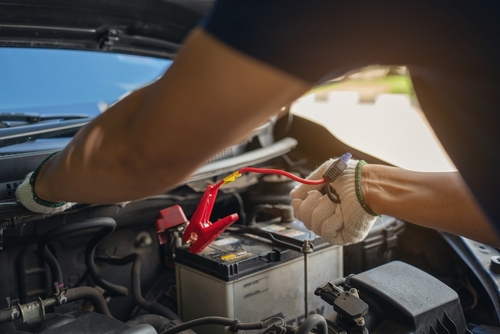
You turn the key and nothing happens. Or you hear that weak, dragging sound from the starter motor that tells you exactly what's going on. The battery is flat.
The good news is that in most cases you don't need roadside assistance or a tow truck — you just need to know what to do. And if you've got the right gear in your boot, you can be back on the road in minutes.
Before you do anything, it's worth making sure the battery really is the culprit and not something else. The most common signs that point to a battery problem are: the engine won't start or sounds sluggish when you turn the key, the battery warning light comes on in red or yellow on the dashboard, your headlights seem dimmer than usual, or the car has been sitting unused for a while.
If any of these sound familiar, the battery is almost certainly the issue.
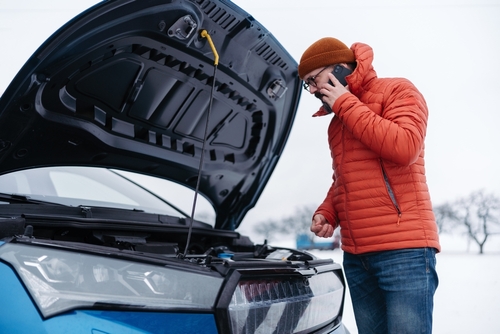
There are plenty of reasons, and it's not always your fault. The most common one is leaving something running with the engine off — lights, the alarm, the radio. Anything that draws power while the engine isn't running takes it straight from the battery, and a few hours is often enough to drain it completely.
The second most common cause is leaving the car parked for an extended period. When the car isn't being driven, the alternator has no chance to recharge the battery. On top of that, systems like the alarm and immobiliser keep running even when the car is sitting idle, slowly draining it. If you're planning to leave the car for several days, start it up every two or three days and let it run for a few minutes.
Third is age. Most conventional car batteries last three to five years depending on how the car is used and the conditions it's kept in. If you can't remember the last time yours was replaced, that's probably your answer.
Finally, big swings in temperature take a toll on battery health. As mechanics often put it, the summer can damage a battery — but the winter is what finishes it off.
You've got three options depending on what you have available.
If a neighbour or a passing driver can help you out, jump leads are the classic fix. The process isn't complicated, but the order in which you connect them matters.
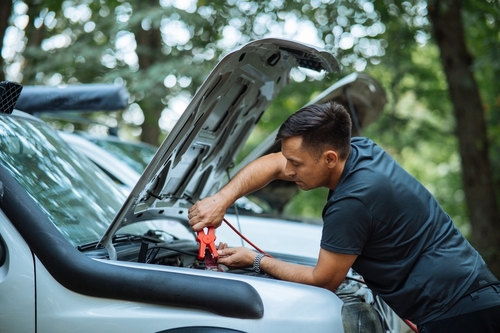
⚠️ Before you start: Never connect the black (negative) lead to the negative terminal of the flat battery. The gases a flat battery gives off can ignite and cause an explosion. Always connect it to a clean, unpainted metal surface on the engine instead.
Step by step:
If the car still won't start after a few attempts, the problem may go beyond just the battery — it's worth calling a mechanic.
This is the most practical solution, and the one we'd most recommend keeping in your car at all times. A portable jump starter is essentially a compact power bank that lets you start your car entirely on your own, with no other vehicle needed. Most models work for motorbikes and boats too.
Using one is straightforward: connect the red lead to the positive terminal (+) and the black to the negative (−), follow the instructions on the device, and you're ready to start. No one else required.
They're small enough to sit in the boot without taking up any real space — and on the day you actually need one, you'll be very glad it's there.
If you don't have leads or a jump starter and your insurance includes breakdown cover, give them a call. It's the most stress-free option, just not the fastest. Once you're back on the road, ask the technician to check the battery's condition — if it needs replacing, far better to find out now than the next time you're stranded somewhere inconvenient.
It depends on how flat it is and how powerful the charger is. As a general rule, a standard car battery takes around six to eight hours to fully recharge with a 10-amp charger. If you've got a 65Ah battery that's lost half its charge, you're looking at about 32.5Ah to recover — which works out to around three to three and a half hours on a 10-amp charger.
If you've just got the car started with jump leads or a jump starter, don't switch it off straight away. Drive for at least 20 to 30 minutes to give the alternator a chance to put some charge back in.
If the battery went flat once and there's no obvious reason why — you hadn't left anything on, the car hadn't been sitting for weeks — it's worth having it tested. If it's happened twice in a short space of time, replace it.
The signs that a battery has had its day: it doesn't hold charge for long, the car struggles to start even when fully charged, or it's simply been four or five years since the last replacement.
A new car battery typically costs €80–€180 depending on the spec and type, plus fitting. That's considerably less than getting stranded at the wrong time in the wrong place.
With a standard 10-amp charger, allow six to eight hours for a full charge. If the battery has only partially discharged, it'll be proportionally quicker. If you've just jump-started the car, drive for at least 20 to 30 minutes to let the alternator do its job before switching off.
It depends on the age and condition of the battery, and whether systems like the alarm are still drawing power. A healthy battery in good condition can typically hold up for four to six weeks without being driven. For longer periods, start the car every two to three days and let it idle for a few minutes.
A few possible causes: the battery may simply be old, the alternator might not be charging it properly, the terminals could be loose or corroded, or a particular electrical system may be drawing current even with the engine off. If it keeps happening, get it looked at by a mechanic.
A new battery runs €80–€180 depending on the power output and type, plus the cost of fitting. Cars with a start-stop system require a specific AGM or EFB battery, which sits at the higher end of that range.
A jump starter is a portable device that lets you start your car without needing another vehicle or anyone else's help. It fits easily in the boot, costs €50–€120, and can save you from a genuinely miserable situation. If you drive regularly or spend time on rural roads, it's absolutely worth it.
Yes — either with jump leads and another car nearby, or with a portable jump starter. Neither option requires any technical knowledge, you just need to follow the correct connection order.
At Geosantro you'll find jump starters and battery chargers from leading brands, suitable for every type of vehicle. Free delivery on orders over €50.
If you've ever stood in front of a concrete wall with a simple draper's trowel in hand, you know
The battery trowel is one of the most useful tools you can have - either