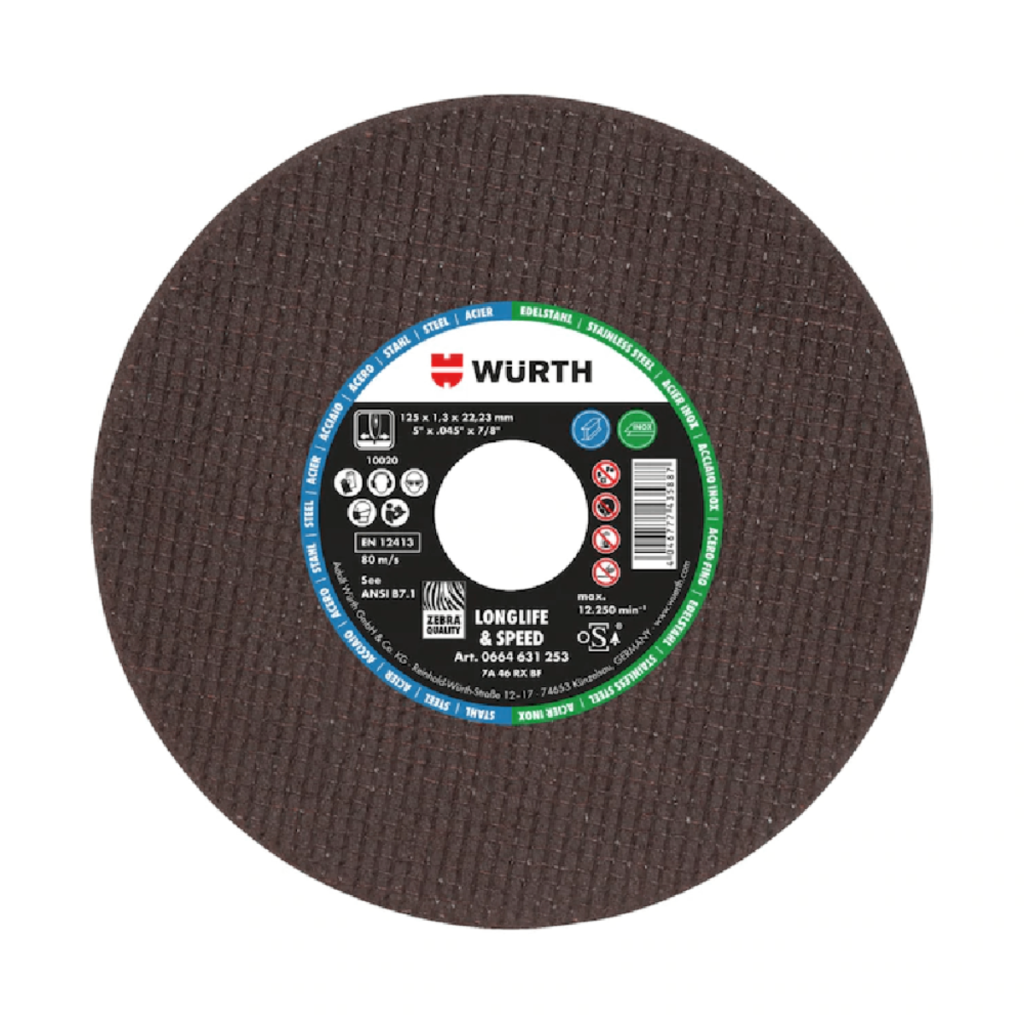
Cutting Discs: How to Read the Labelling and Which One to Choose
The label on the cutting disc is not just for decoration. Within a few centimetres of paper, there are


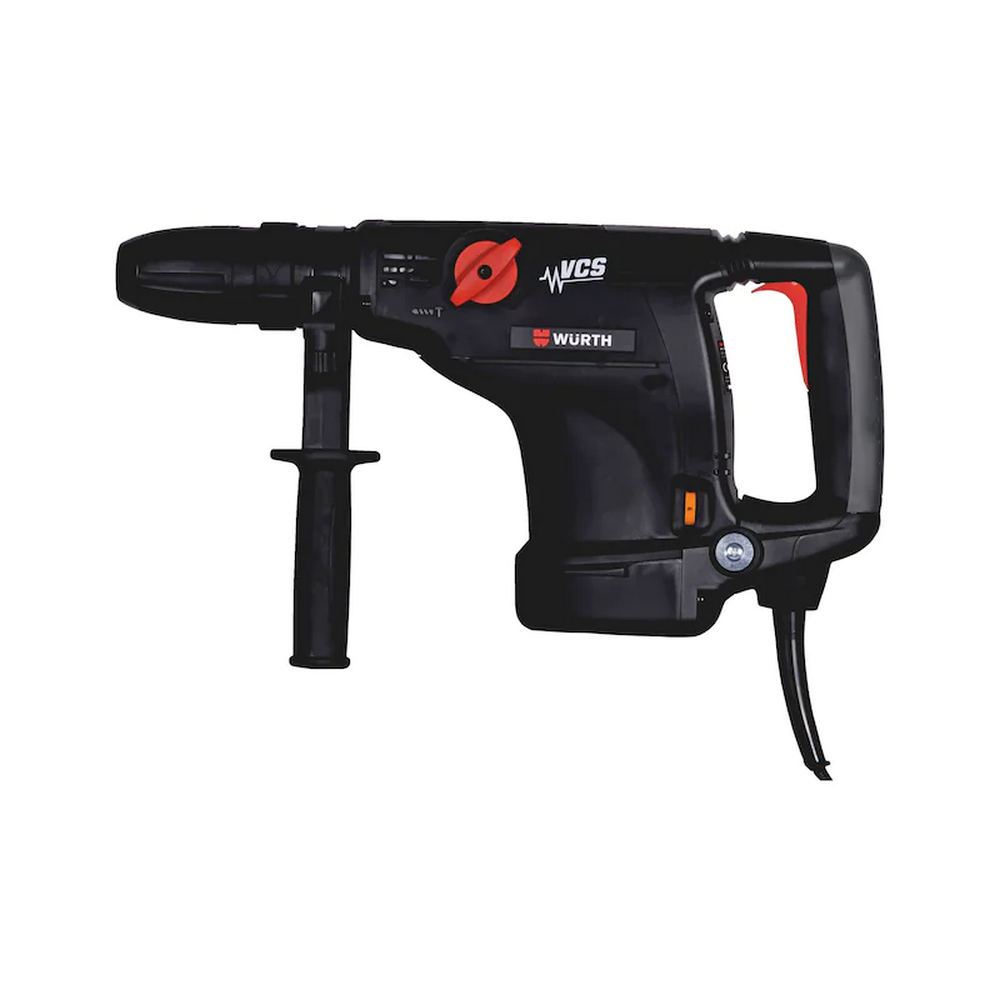
If you've ever stood in front of a concrete wall with a standard drill driver in your hand, you already know why you need a hammer drill. It's the tool that breaks through limits — literally. It combines rotational movement with rapid back-and-forth strikes, giving you the power to open holes in concrete, stone, brick and any hard material you encounter in construction and renovation work.
But not all hammer drills are the same. From a straightforward 650W model for installations to a 1,100W powerhouse for heavy construction, the right choice depends on what you actually need.
| Model | Power | Chuck | Impact Energy | Functions | Suitable for |
| ESB65-13K | 650W | 13mm (keyless) | — | Drill / Hammer drill | DIY, light use |
| ERHD 28MLS SDS-Plus | 800W | SDS-Plus | 3,2 J | Drill / Hammer / Chiselling | Tradesperson, construction |
| ERHD H8-28 SDS | 800W | SDS-Plus | 3,2 J | Drill / Hammer / Chiselling | Tradesperson, construction |
| H24-MLS SDS-Plus | — | SDS-Plus | — | Drill / Hammer / Chiselling | Professional, medium-duty use |
| EHD 40COMBI | 1.100W | SDS-Max (40mm) | — | Drill / Hammer / Chiselling | Heavy construction, concrete |
Before diving into the models, it's worth understanding a few key concepts. They'll help you make the right choice — and avoid spending money on something that doesn't match the work you actually do.
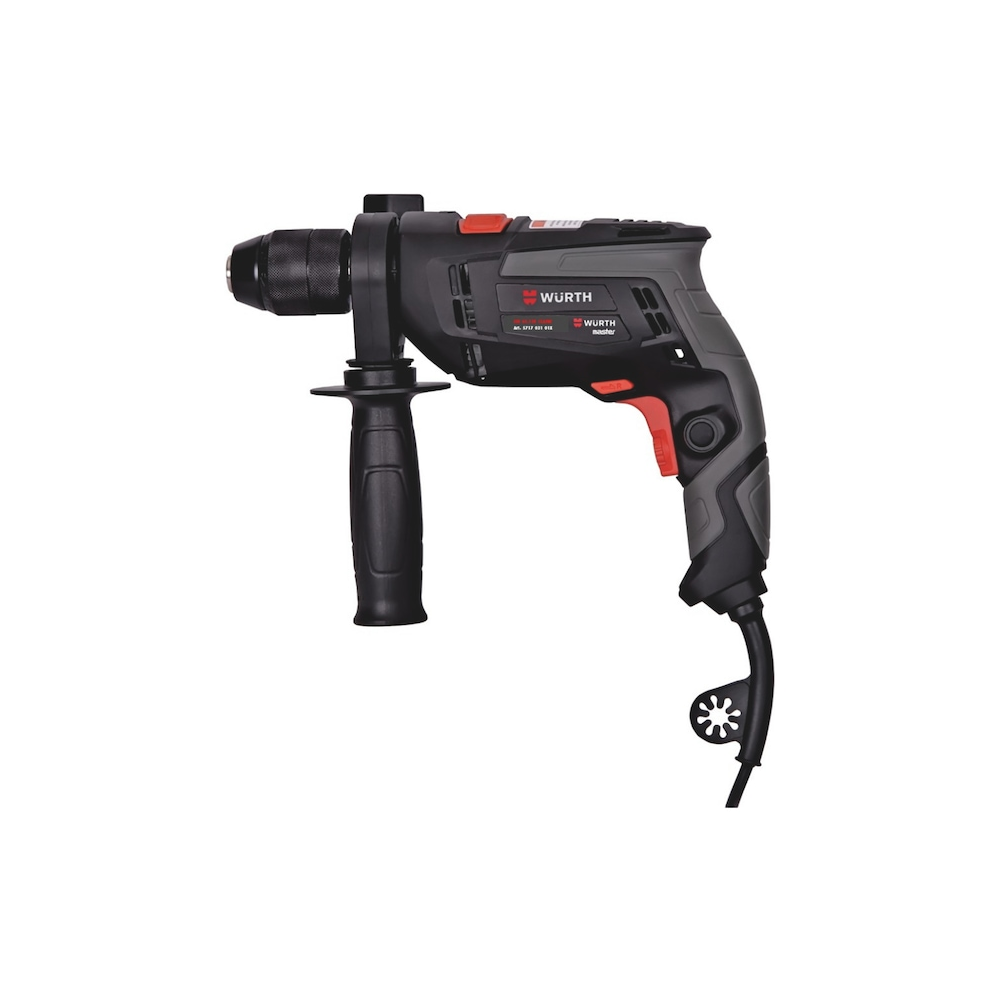
The ideal choice for the home user who wants a reliable tool without overspending. With 650W of power, a keyless quick-change chuck up to 13 mm and two operating modes (standard drilling and hammer drilling), it covers the most common everyday needs: fixing plugs, hanging fixtures, minor repairs. The ergonomic grip with rubber coating reduces fatigue, the variable-speed trigger gives full control and the stable auxiliary handle with depth stop ensures accuracy even at awkward angles.
Ideal for: home use, minor repairs, installations in brick and light-category concrete.
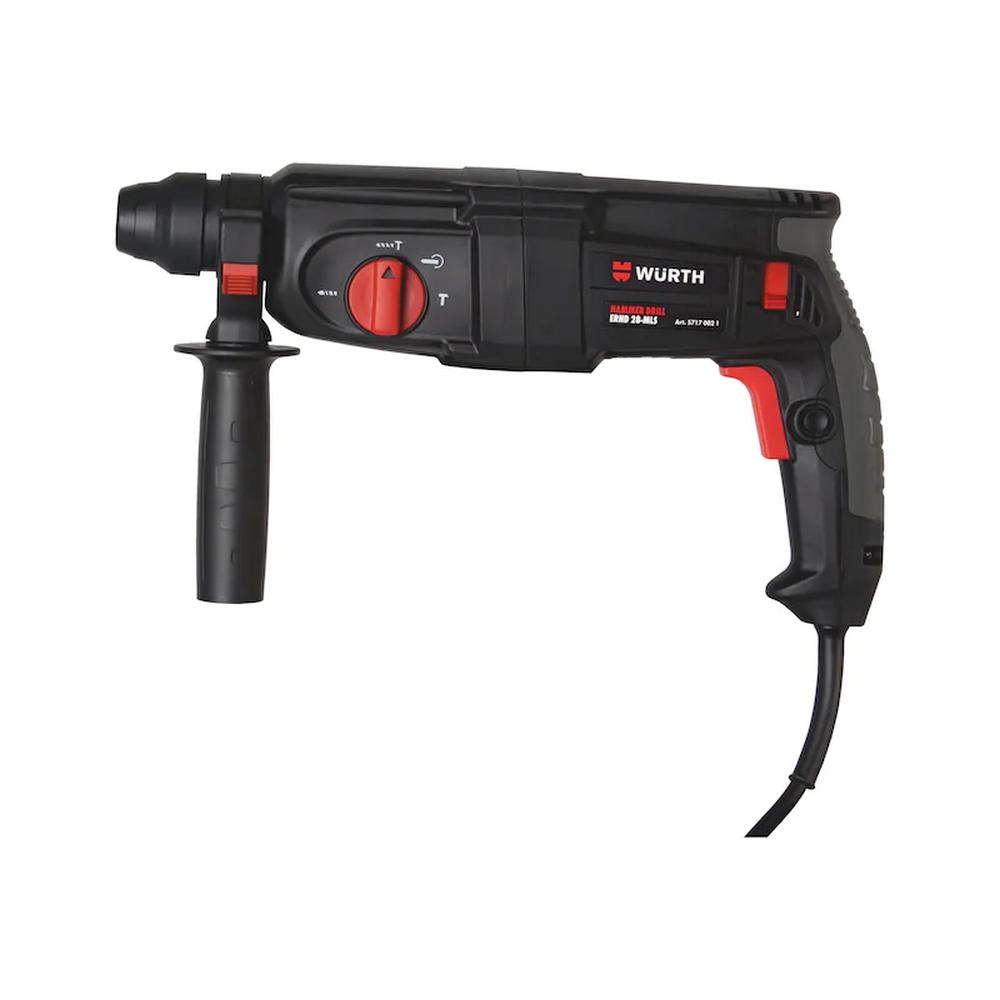
A clear step up from basic home models. With 800W of power and 3.2 J of impact energy, it opens holes in concrete walls, brick and stone with ease. The SDS-Plus chuck ensures a secure bit hold and maximum energy transfer. Three operating modes — drilling, hammer drilling and chiselling — make it a versatile tool for construction work. The reverse mechanism helps remove jammed bits, while the ergonomic design minimises fatigue during extended use.
Ideal for: tradespeople, renovations, installations in hard materials, daily professional use.
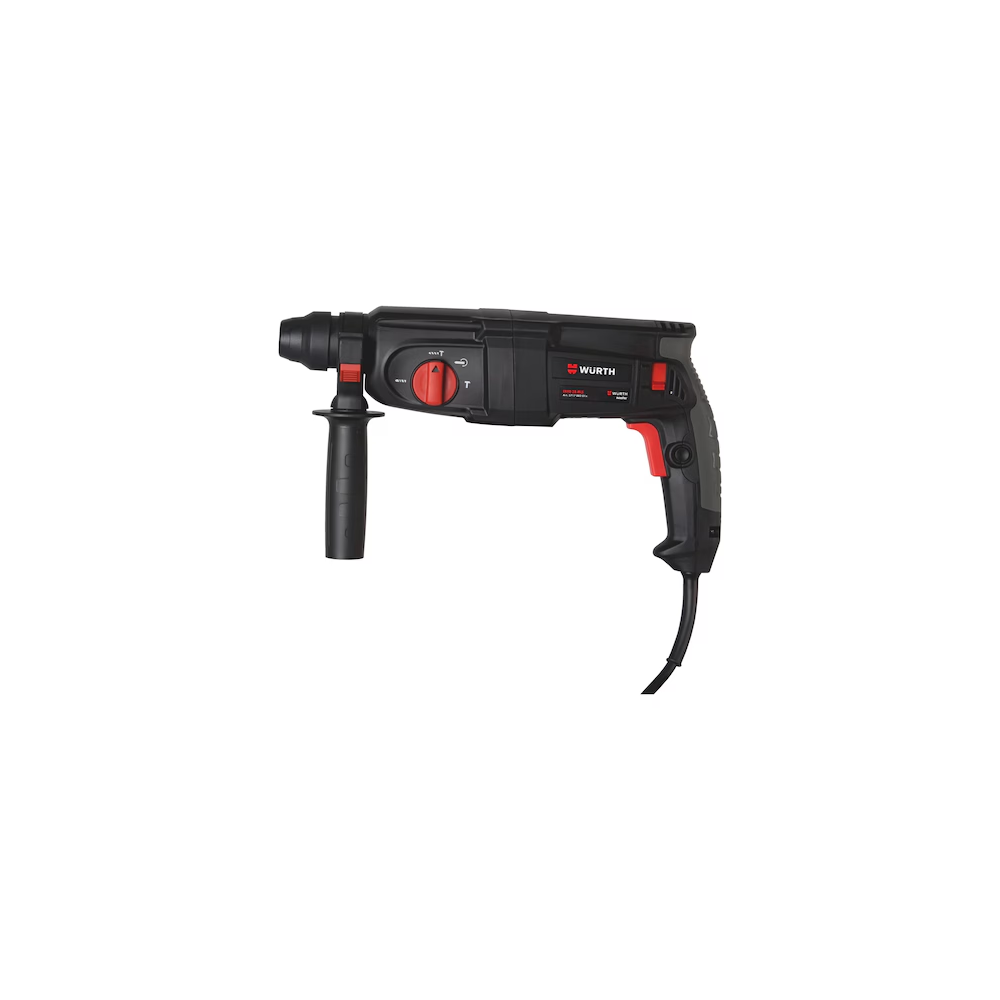
Similar in core technical specifications to the ERHD 28MLS — 800W, 3.2 J impact energy, SDS-Plus chuck, three operating modes — but designed with different ergonomics that suit specific types of work and angles better. The same reliability and durability thanks to high-quality components, with a low weight that reduces fatigue during extended use.
Ideal for: tradespeople who want the same power as the ERHD 28MLS with a different ergonomic feel.
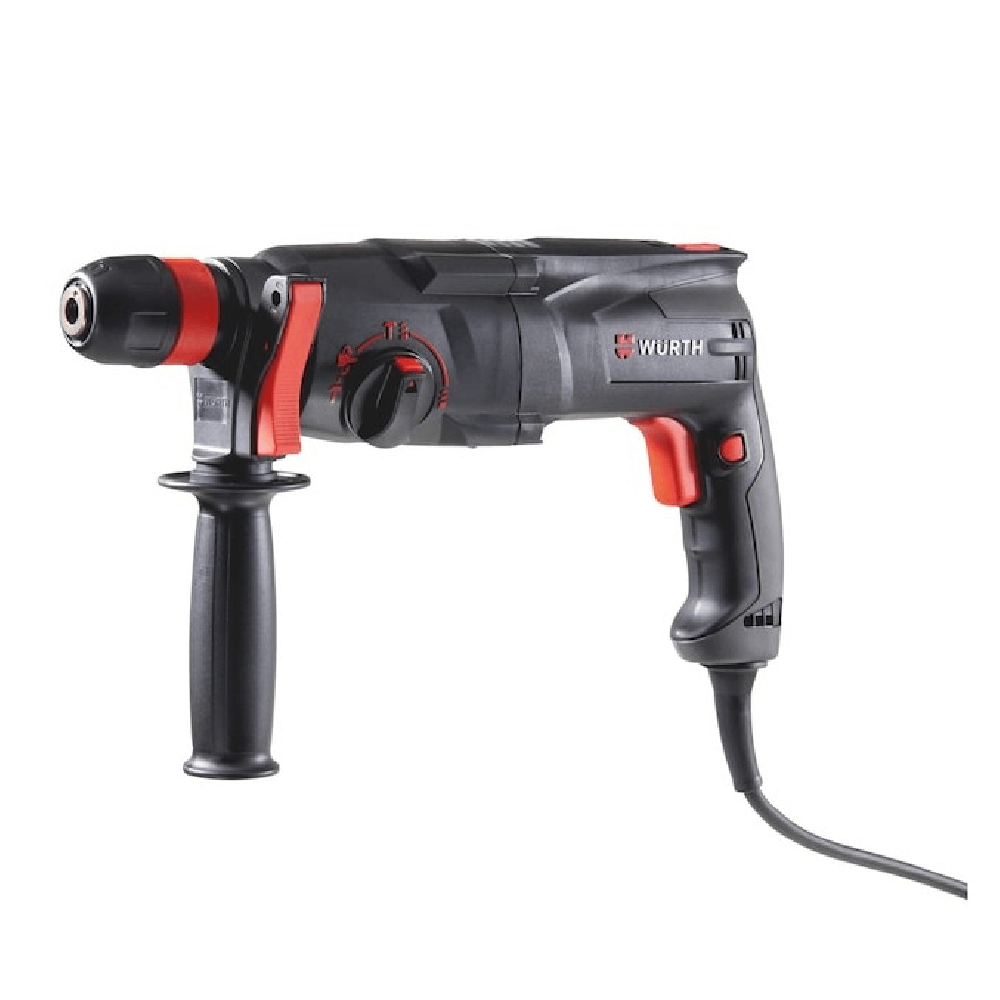
A professional-grade tool with an SDS-Plus chuck that bridges the gap between the 800W models and the heavy-duty EHD 40COMBI. Suited to medium-scale construction work, drilling into dense concrete and applications that call for a combination of percussive power and versatility. Part of the Würth range, it carries the guaranteed durability and reliability that professionals expect.
Ideal for: professional tradespeople, construction sites, medium-scale construction applications.
This is the heavy artillery of the list. With 1,100W of power, an SDS-Max chuck with a 40 mm capacity and a dual anti-vibration system (AVT/TMD), it takes on even the most demanding materials without breaking a sweat. The exceptionally low noise and vibration levels set it apart in this category — you can work for hours without the physical toll. The variable speed control ring ensures optimal performance for each material, while the soft-start function prevents sudden kickback that creates a safety risk.
Ideal for: heavy construction, excavation work, cutting and demolishing reinforced concrete, professional construction sites.
The answer comes down to two things: the materials you're working with and how often you use it. For home use and light installations, the ESB65-13K does the job. For daily professional use in buildings, the ERHD 800W models or the H24-MLS are the right call. And for those jobs where nothing else will do — the EHD 40COMBI 1,100W is the answer.
At Geosantro you'll find all of the above Würth models with immediate availability and free shipping in Cyprus on orders over €50. Whether you're after a straightforward hammer drill for home use or a professional-grade tool for the job site, you'll find exactly what you need here — backed by the quality guarantee that comes with every Würth tool.
A standard drill only rotates and is used on wood and metal. A hammer drill adds rapid back-and-forth strikes alongside the rotation, giving it the force to break through hard materials such as concrete, brick and stone. For any wall-drilling task in a typical building, a hammer drill is not optional — it's essential.
Impact energy (in Joules) indicates the force delivered by each individual strike. For soft concrete and brick, 2–3 J is sufficient. For reinforced concrete and dense stone, you need 4 J or more. The higher the impact energy, the faster and more easily the hole is made — with less effort from the operator.
SDS-Plus is the most widely used chuck system for professional hammer drills, suitable for applications up to around 26–30 mm in diameter. SDS-Max is designed for heavy-duty tools with large-diameter bits exceeding 30 mm, used in extremely hard materials and at greater drilling depths. If you're drilling standard fixing holes, SDS-Plus covers you.
Yes, almost all hammer drills have a mode selector. You can use it as a standard drill for wood and metal, or switch the hammer function on only when you need it. This makes it a versatile all-round tool that handles different materials and tasks — effectively replacing the need for a separate drill in most workshops.
Absolutely. Using a hammer drill generates dust, debris and high noise levels. Always wear safety glasses to protect your eyes, a dust mask when drilling concrete, and ear protection during extended use. For work near electrical installations, always check first with a cable detector before drilling into any wall surface.
The label on the cutting disc is not just for decoration. Within a few centimetres of paper, there are
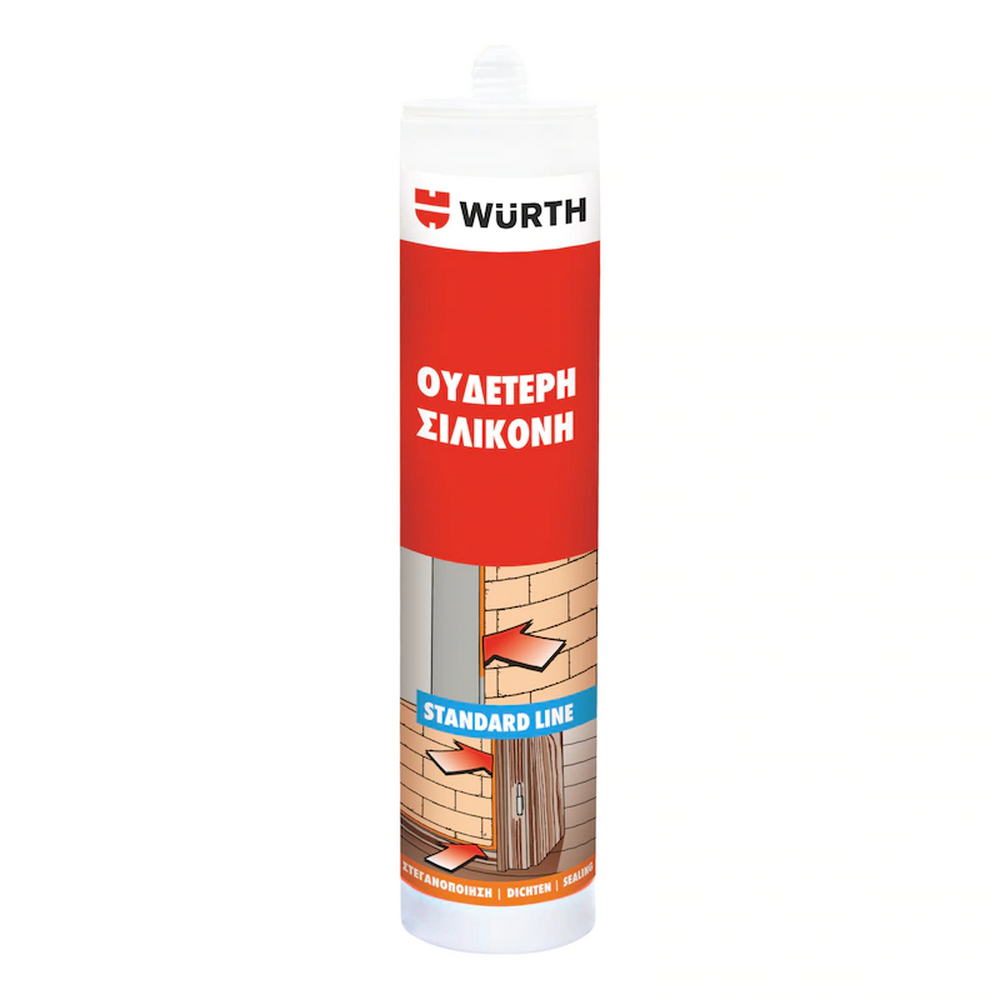
The three materials look the same inside the cartridge but behave completely differently on the joint.